 Atlanta Pro Network

Yes, an exclusive territory marketing agency is worth it, if the territory is in writing and the team behind it can do the work. Exclusivity answers one question: will your agency also work for the roofer, plumber or remodeler you're competing with down the street? The other question, whether the marketing books you jobs, still has to be answered on its own.
TL;DR
- Exclusivity means your agency won't take on a direct competitor in your trade inside your agreed area.
- The territory should be agreed in writing before you sign, drawn around where you actually want to win work.
- It's a reason to trust the strategy, not a substitute for one. Judge the work on its own.
- Ask: if the exclusivity clause vanished, would you still hire this team?
Why exclusivity matters to a contractor
Think about what you hand an agency. Your pricing. Which jobs make money and which don't. Which neighborhoods you want more of. Your review strategy, your ad budget, your slow months.
Now picture the same agency running marketing for the company you bid against every week. Even with good intentions, the conflict is real. Whose campaign gets the better keywords? Whose Google Business Profile gets attention first? Who gets the idea that worked?
An exclusive agency takes that question off the table. That's the whole point, and it's a good one.
What an exclusive territory marketing agency should put in writing
The promise should be specific enough that you and the agency would describe it the same way a year from now. Four things to look for:
1. It's agreed before you sign
The territory should be settled upfront and written into the agreement, not described on a sales call and left there. If exclusivity helped sell the deal, it belongs on paper.
2. It's drawn around where you want to win work
A good territory isn't a template radius around your shop. It's based on where your crews actually go and where you want more jobs.
A Roswell roofer might want Roswell, Alpharetta, Milton and East Cobb. A remodeler might care most about Brookhaven, Dunwoody and Sandy Springs, where kitchens and baths are worth the drive. A plumber doing repipes might focus on intown neighborhoods like Decatur where older housing stock means more of that work. The boundary should match your plan, not the agency's map.
You can see how we think about markets on our service-area pages for places like Roswell, Marietta and Decatur.
3. It names your trade clearly
"Home services" is too broad to protect anything. The agreement should name your trade: roofing, plumbing, HVAC, electrical, painting, landscaping, remodeling, pool building. Then you both know who counts as a direct competitor.
4. It says the agency won't take on a direct competitor there
That's the commitment itself. Inside your agreed area, in your trade, the agency won't sign the company you're competing with.
If an agency can't state those four things plainly, the exclusivity is a sales line, not a term.
Exclusive territory vs. a shared agency
| Arrangement | Who it suits | What you get | What to watch |
|---|---|---|---|
| Exclusive by trade and territory | Owners who don't want their agency working for a direct local competitor | A written promise your agency won't serve the company you bid against | Whether the boundary matches where you want work, and whether the work is good |
| Non-exclusive agency | Owners who care more about a specific skill than who else is on the roster | Access to an agency that may know your trade well from other clients | How the agency handles two clients chasing the same jobs |
Neither label wins on its own. An exclusive agency doing weak work still leaves gaps on your calendar. A non-exclusive agency still owes you a straight answer about competing clients.
What exclusivity does and doesn't do
Exclusivity is about who your agency works for. It doesn't stop other contractors from advertising, and it isn't a ranking. You still have to earn your spot in the map pack and in search, and you still have to win the call when a homeowner phones three companies.
That's not a weakness of exclusivity. It's why the marketing behind it matters. The protection means the team's best thinking for your trade in your area goes to one company: yours.
Check the work before you buy the territory
Use this order when you compare an exclusive offer. It keeps the conversation on booked work instead of letting the territory carry the whole pitch.
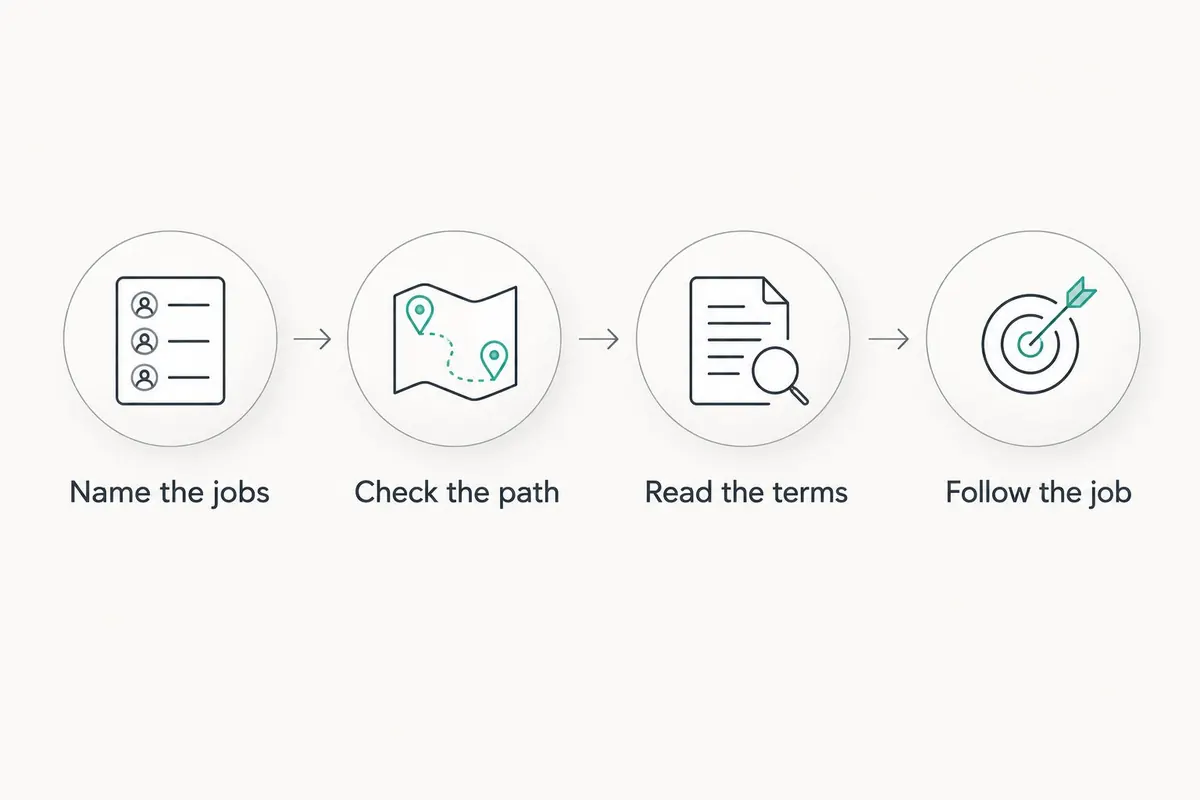
Name the jobs you want
Tell the agency which services you want more of and where. Include the work you don't want. A call for a gutter cleaning isn't progress for a roofer chasing full replacements.
Ask what they'll do first, and why
A useful answer ties a specific problem to a specific move. "Your Google Business Profile has the wrong categories and no recent photos, so we'll fix that first." "Your service pages don't mention the towns you want, so we'll rebuild them." Vague answers about "boosting visibility" are a warning.
Check what happens after the call
More calls don't help if they go to voicemail on a job site. Ask how the agency handles missed calls, follow-up on estimates, and review requests. The best agencies don't just send traffic; they build the system that catches it.
Agree how you'll judge it
You don't need a report full of jargon. You need to know which calls were real jobs, which became estimates and which became booked work. Our post on judging marketing by booked jobs goes deeper on that.
Questions to ask before you sign
- What exactly is my territory, and is it written into the agreement?
- How did you decide on the boundary? Does it match where I want to win work?
- How do you define my trade?
- What will you work on in the first month, and why?
- What happens when a call comes in and nobody can answer?
- Can I leave if the work isn't good, or am I locked into a long contract?
That last one matters more than it seems. Exclusivity locked inside a 12-month contract can protect the agency as much as it protects you.
Exclusivity and shared leads are different things
Don't confuse an exclusive agency with "exclusive leads" from a lead marketplace. Services like HomeAdvisor, Angi and Thumbtack can sell the same homeowner's request to several contractors at once. That's a race to the phone, not exclusivity.
When an agency markets your business, the leads come to you because of your website, your profile and your ads. They're yours. If you're weighing the two, our piece on replacing shared lead services walks through it.
How territory works at Atlanta Pro Network
We work with one contractor per trade in each market, so we'll never take on your competitor.
Here's how it works in practice. Before you sign, we agree your territory in writing, based on where you actually want to win work across Metro Atlanta: Buckhead, Sandy Springs, Alpharetta, Johns Creek, East Cobb, Decatur or wherever your crews go. Inside that area, we won't work with a direct competitor in your trade.
Then we do the work. That means a website and SEO built for your services and towns, a Google Business Profile built for the map pack, review requests, and CRM automations like missed-call text-back so leads don't slip while you're on a roof or under a sink. The leads are yours, never resold. After the build we work month to month, no 12-month contract.
Rally Built Homes, a kitchen remodeler in East Atlanta, is one example: we built their website, Google Business Profile and CRM.
If you want to see whether your trade is still open in your area, book a free 20-minute call. Bring your service area and the jobs you want more of.
The one question to ask yourself
If the exclusivity clause disappeared, would you still hire this team?
If yes, the territory is a bonus that protects good work. If no, the territory is doing too much of the selling. Get the work right, get the boundary in writing, and judge the relationship by the jobs it books.
FAQ
What does exclusive territory mean in contractor marketing?
Your agency agrees in writing not to work with a direct competitor in your trade inside your agreed area.
Will an exclusive territory guarantee more jobs?
No. It decides who your agency works for. The jobs come from the marketing itself and how well calls are caught and followed up.
How should my territory be drawn?
Around where you actually want to win work, not a fixed radius. Compare the written boundary to where your crews go and where you want to grow.
Is exclusivity a good enough reason to switch agencies?
Not on its own. Switch if the work isn't booking jobs, and look for an agency that offers both good work and a written territory.
